Ear fullness, also called aural fullness, describes a feeling of pressure, blockage, or heaviness inside one or both ears. It is a symptom rather than a disease, and several conditions can cause it, from a recent cold or a flight to earwax, fluid behind the eardrum, or a jaw problem. If one ear suddenly feels blocked and your hearing drops at the same time, seek emergency medical care, ideally within 24 hours.
Have you ever woken up with one ear feeling blocked? Maybe sounds seem muffled, or your ear feels like it needs to pop.
You try yawning, swallowing a few times, or moving your jaw, but nothing seems to help. Why does this happen? Is it just earwax, or could something else be causing it?
Your first thought might be earwax. That's understandable. Yet ear fullness doesn't always mean something is stuck inside your ear.
Sometimes, the problem starts with a cold you had last week. Sometimes, pressure builds up behind your eardrum. And occasionally, the blocked sensation can be an early sign of a hearing problem that needs prompt medical attention.
Ear fullness, also called aural fullness, describes a feeling of pressure, blockage, or heaviness inside one or both ears. It is a symptom rather than a disease, and several conditions can cause it.
The useful question isn't simply how to unblock your ear. It's why the blockage feels like it's there in the first place.
What Does Ear Fullness Actually Feel Like?
A blocked ear can feel different from person to person. Sounds may seem dull, almost as if you're wearing an earplug. You might hear clicking or crackling when you swallow, or notice that your own voice sounds unusually loud. Sometimes there's pressure or discomfort. Other times, there's no pain at all, just that annoying feeling that your ear won't clear.
The sensation may affect one ear or both. It can appear suddenly, come and go, or remain for several days.
One important detail often gets overlooked: you can experience ear fullness even when your ear canal is completely clear.
Your ear has three main parts: the outer ear, middle ear, and inner ear. A problem in any of these areas can produce a similar blocked sensation. Sometimes, the discomfort doesn't even originate in the ear.
That's why two people with almost identical symptoms may need entirely different treatments.
Why Does My Ear Feel Blocked? Common Causes of Ear Fullness
That cold may still be affecting your ears
Have you noticed your ears feeling blocked during a cold or a bout of allergies?
The Eustachian tube is a narrow passage between your middle ear and the back of your nose. Every time you swallow or yawn, it opens briefly to let air pass through. This keeps the pressure behind your eardrum balanced, so your ears can function normally.
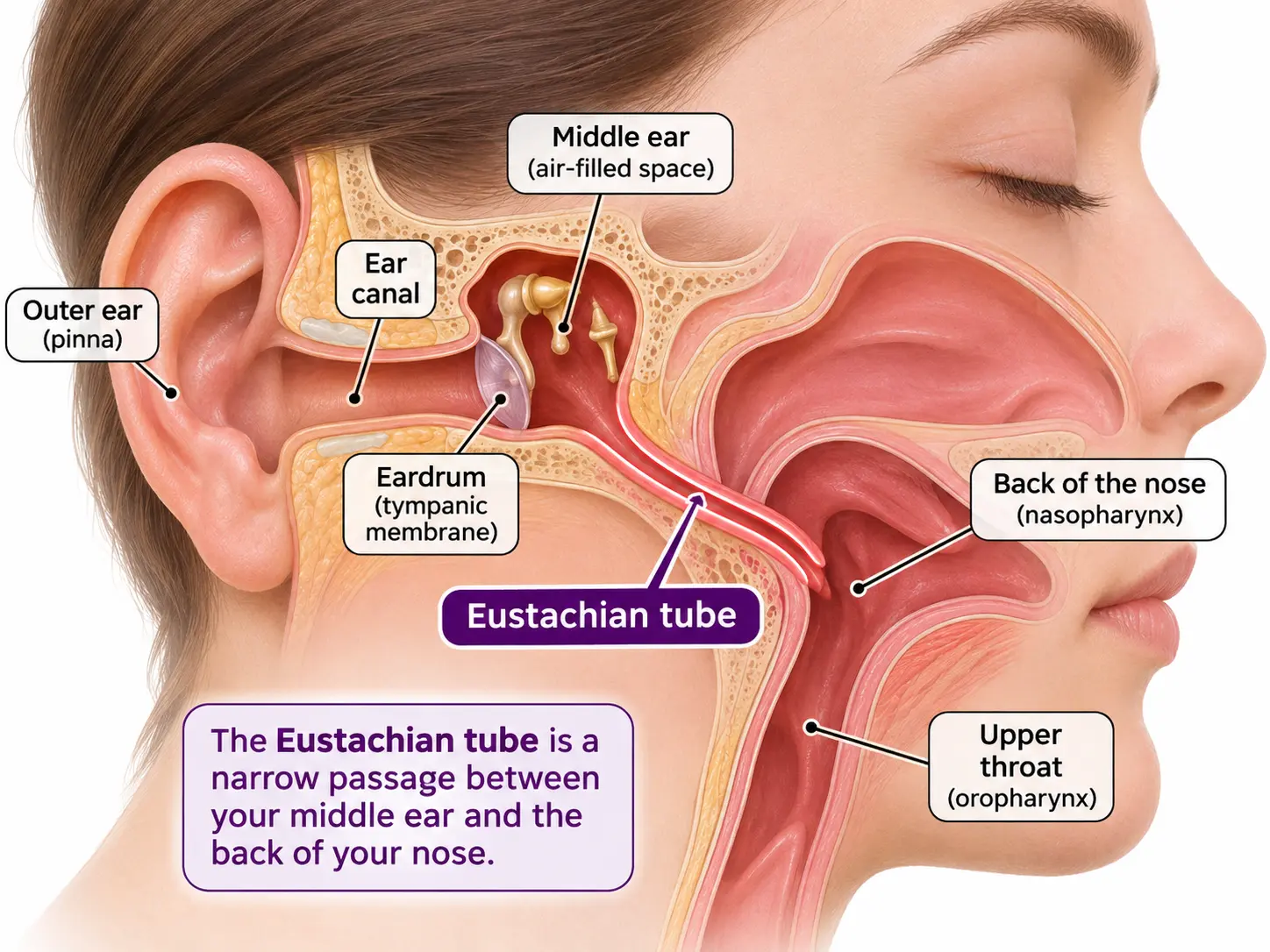
When a cold or allergy causes swelling around this tube, it may not open properly. Pressure builds up behind the eardrum, leaving your ear feeling full or your hearing slightly muffled.
Doctors call this Eustachian tube dysfunction.
You might also notice popping, clicking, or crackling sounds. The discomfort can continue even after your runny nose and sore throat have improved.
Sometimes, it really is earwax
Earwax protects the ear canal by trapping dirt and helping keep the skin healthy. Usually, it moves out naturally.
But occasionally, wax builds up and forms a blockage.
Unlike the pressure changes associated with a cold, earwax buildup often develops gradually. You may notice that sounds seem quieter in one ear, along with itching, ringing, or a plugged sensation.
Using cotton buds can make matters worse by pushing wax deeper into the canal.
Your recent flight could explain it
Think about what happens when an aeroplane begins descending. Your ears start feeling tight, you swallow repeatedly, and then you hear a small pop.
That's your middle ear trying to balance the changing air pressure.
If your Eustachian tube cannot adjust quickly enough, the pressure difference may leave your ear feeling blocked after landing. Doctors call this ear barotrauma when pressure changes cause injury or discomfort.
A similar problem can occur while diving.
Mild pressure-related fullness often settles, but severe pain, bleeding, dizziness, or hearing loss after a pressure change needs medical assessment.
An ear infection or trapped fluid
Ear infections can cause fullness, particularly when inflammation or fluid affects the middle ear.
You may also have ear pain, fever, reduced hearing, or discharge.
However, fluid can remain behind the eardrum without an active infection. This condition, called otitis media with effusion, can dull your hearing even without fever or significant pain.
It occurs more frequently in children, although adults can develop it too.
The problem might be your jaw
Here's a possibility many people don't consider.
Your jaw joint sits immediately in front of your ear. If the joint or surrounding muscles become painful or tense, you may feel discomfort or fullness around the ear.
This is sometimes associated with temporomandibular joint disorder, or TMD.
Pay attention to what happens when you chew, yawn, or open your mouth widely. Does your jaw click? Does the discomfort increase after a long conversation or a meal?
These details may point towards a jaw-related problem rather than an ear blockage.
Less commonly, an inner-ear condition
Ear fullness can sometimes accompany conditions affecting hearing and balance.
For example, Ménière's disease may cause episodes of ear pressure along with spinning dizziness, ringing in the ear, and fluctuating hearing.
These symptoms don't automatically mean you have Ménière's disease. Several conditions can produce similar complaints.
An ENT examination and appropriate hearing tests can help distinguish between them.
Why Is Only One Ear Feeling Full?
It's tempting to think that fullness in one ear is less concerning than fullness in both. But the number of ears affected doesn't tell the whole story.
Earwax, Eustachian tube problems, and infections can affect either one ear or both.
What matters more is how quickly the symptom appeared, whether your hearing has changed, and what else you're experiencing.
For example, a gradual blocked feeling after a cold may suggest a pressure-related problem. Fullness with jaw clicking may point to something else.
But there's one situation you shouldn't dismiss.
If one ear suddenly feels blocked and your hearing drops at the same time, don't assume it's wax.
Sudden sensorineural hearing loss, a condition affecting the inner ear or hearing nerve, can initially feel like an ordinary blocked ear. It may occur without pain, and some people first notice it when they wake up.
You should also see an ENT specialist if one ear continues to feel full, especially when you notice ringing, dizziness, or changes in your hearing.
What Can You Safely Do to Relieve Ear Fullness?
If your ear feels mildly blocked after a cold or a flight, you may be able to ease the discomfort with simple measures.
Start with something simple. Swallow a few times, drink some water, or try yawning. These movements can help open the Eustachian tube and ease mild pressure inside the ear.
Don't force your ears to pop if the pressure doesn't clear. Persistent blockage may have another cause that needs examination.
And resist the temptation to clean deep inside your ear.
Cotton buds, hairpins, and other objects can push wax further in or injure the ear canal and eardrum. Ear candles aren't a safe alternative either.
You may have heard that pinching your nose and blowing can unblock your ears. This pressure-equalising technique can sometimes help, but forceful blowing may cause injury. Don't attempt it if you have significant ear pain, discharge, a suspected eardrum injury, or recent ear surgery without medical advice.
Most importantly, don't keep trying different home remedies when your hearing has suddenly changed.
When Should Ear Fullness Worry You?
Mild ear fullness after a cold or flight may improve on its own. But some symptoms change how urgently you should seek help.
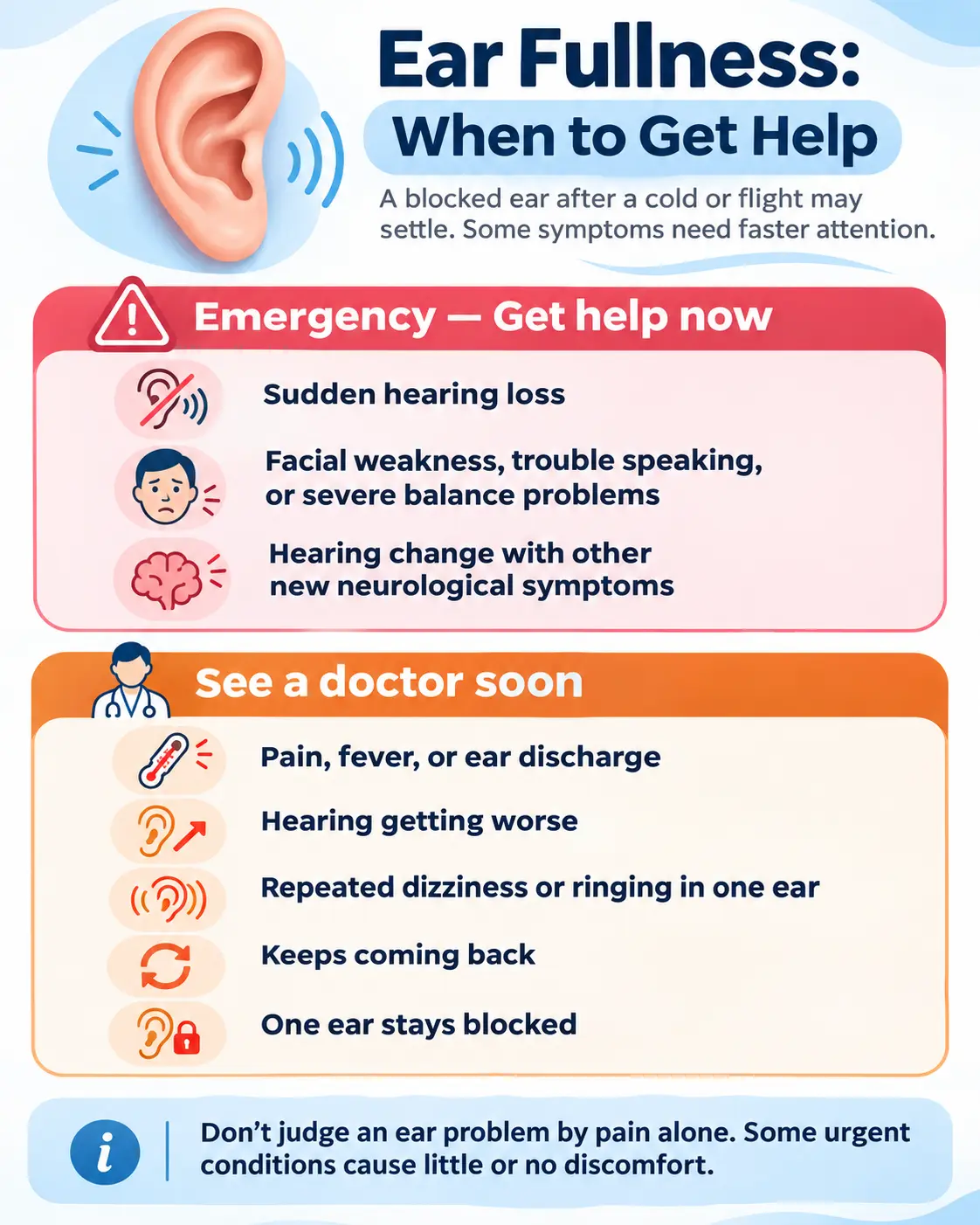
Seek emergency medical assessment if
- You experience sudden hearing loss in one or both ears, even without pain.
- You develop new facial weakness, trouble speaking, or severe difficulty walking or maintaining balance.
- A sudden hearing change occurs alongside other new neurological symptoms.
Arrange a prompt medical examination if
- Ear fullness comes with significant pain, fever, or discharge.
- Your hearing has been worsening over several days.
- You experience repeated dizziness or persistent ringing in one ear.
- The blockage keeps returning or doesn't improve.
- One ear remains blocked without an obvious explanation.
Don't judge the seriousness of an ear problem by pain alone. Some conditions that need urgent attention cause little or no discomfort.
What Happens When You Visit an ENT Doctor for Ear Fullness?
You might expect an ENT doctor to look inside your ear and remove wax right away. Sometimes, that's all that's needed.
But when wax isn't the problem, the examination goes further.
The doctor will usually start by asking a few specific questions. When did the fullness begin? Did you recently have a cold? Does your ear pop when you swallow? Have you noticed ringing, dizziness, or difficulty hearing someone speak?
Your answers help narrow down the possible causes.
Next, the doctor performs an ear examination with an otoscope, a small instrument that lets them examine the ear canal and eardrum. This can reveal wax buildup, inflammation, an eardrum injury, or signs of fluid behind the eardrum.
If your symptoms suggest a hearing or middle-ear pressure problem, the doctor may recommend additional tests.
- Pure-tone audiometry measures how well you hear sounds at different pitches and volumes. It helps identify hearing loss and assess its pattern.
- Tympanometry checks how the eardrum responds to changes in air pressure. It can provide useful information about middle-ear function.
In selected cases, ENT specialists may examine the nose and the opening of the Eustachian tube or recommend further investigations.
Not everyone needs all these tests.
The aim is to understand what's causing the sensation before deciding whether treatment is necessary.
Does Ear Fullness Always Need Treatment?
No. Some episodes settle as the underlying cold improves or the pressure in your middle ear returns to normal.
Whether you need treatment or not depends on the cause. For example, sometimes just removing earwax may help you feel better. At other times, if ear fullness is caused by an allergy, it improves with medicines that reduce nasal inflammation. So we decide the line of treatment based on the severity and cause of ear fullness.
If fluid remains behind the eardrum, the doctor may recommend observation, hearing assessment, or further treatment based on how long it has been present and whether it affects hearing.
Jaw-related fullness may need a different approach altogether.
And when testing identifies sudden sensorineural hearing loss, urgent specialist treatment may be necessary.
This is why using ear drops without knowing the cause isn't always helpful. A treatment that works for wax won't correct an inner-ear hearing problem.
A Blocked Ear Is Worth Paying Attention To
It's easy to ignore ear fullness when it doesn't hurt. You may continue your day, hoping the pressure will disappear.
Often, it does.
But if the sensation keeps returning, lasts longer than expected, or affects your hearing, an examination can help identify the cause.
If your ear keeps feeling blocked or the problem returns frequently, it's worth finding out what's causing it. At Ramakrishna Hospital, an ENT hospital in Jayanagar, Bangalore, ENT doctors examine ear-related symptoms and recommend further tests when necessary. Treatment depends on what the examination reveals.
The next time your ear feels blocked, notice when it started and whether your hearing has changed.
If the hearing change was sudden, seek medical help without delay.
Frequently Asked Questions About Ear Fullness
Why does my ear feel full but it is not painful at all?
We have seen patients who experience ear fullness without pain. It can occur when the Eustachian tube isn't balancing pressure properly, when fluid collects behind the eardrum, or when wax blocks the ear canal. Some hearing conditions can also cause a blocked sensation without pain. If your hearing changes suddenly, seek emergency assessment rather than waiting for pain to develop.
Can ear fullness happen even when there is no earwax?
Yes. Your ear canal may look completely clear, but pressure or fluid behind the eardrum can create a blocked feeling. Eustachian tube dysfunction, jaw joint problems or inner-ear conditions can also lead to similar symptoms.
Can allergies make my ears feel blocked?
Yes, they can. When you have allergies, the lining of your nose can become swollen, affecting the Eustachian tube as well. This makes it harder for your ears to balance pressure, leaving them feeling blocked or stuffy. You may also notice popping sounds when you swallow.
Why does my ear feel blocked when I wake up?
There could be a few reasons. You might have nasal congestion, a buildup of earwax, or a habit of grinding your teeth while sleeping. But if you wake up and suddenly notice that you can't hear properly from one ear, don't assume it's just wax. Get your hearing checked urgently, ideally the same day.
How long does ear fullness last after a flight?
For most people, the blocked feeling clears within a few minutes or hours after landing. Swallowing or yawning may help your ears adjust to the pressure. If the fullness doesn't settle, or you develop pain, dizziness, or bleeding, see a doctor. A sudden loss of hearing needs emergency assessment, even if it happened during a flight.
Can stress make your ears feel full?
Not directly in most cases, but stress can play a part. Some people unknowingly clench their jaw or grind their teeth when they're stressed. This can put strain on the jaw joint, which sits close to the ear. If your ears feel full and you also notice jaw clicking, soreness, or pain while chewing, the two problems may be connected.
Should I see an ENT specialist if my ear keeps getting blocked?
Yes, particularly if it keeps happening without an obvious reason. You should also get it checked if you notice ringing, dizziness, or changes in your hearing. An ENT specialist can examine your ear, check whether there's a pressure or hearing problem, and suggest treatment if needed. You don't have to wait until the blockage becomes painful.
Medical disclaimer: This article provides general health information and does not replace an individual medical assessment. Symptoms, investigations, and treatment vary according to the patient's condition.